
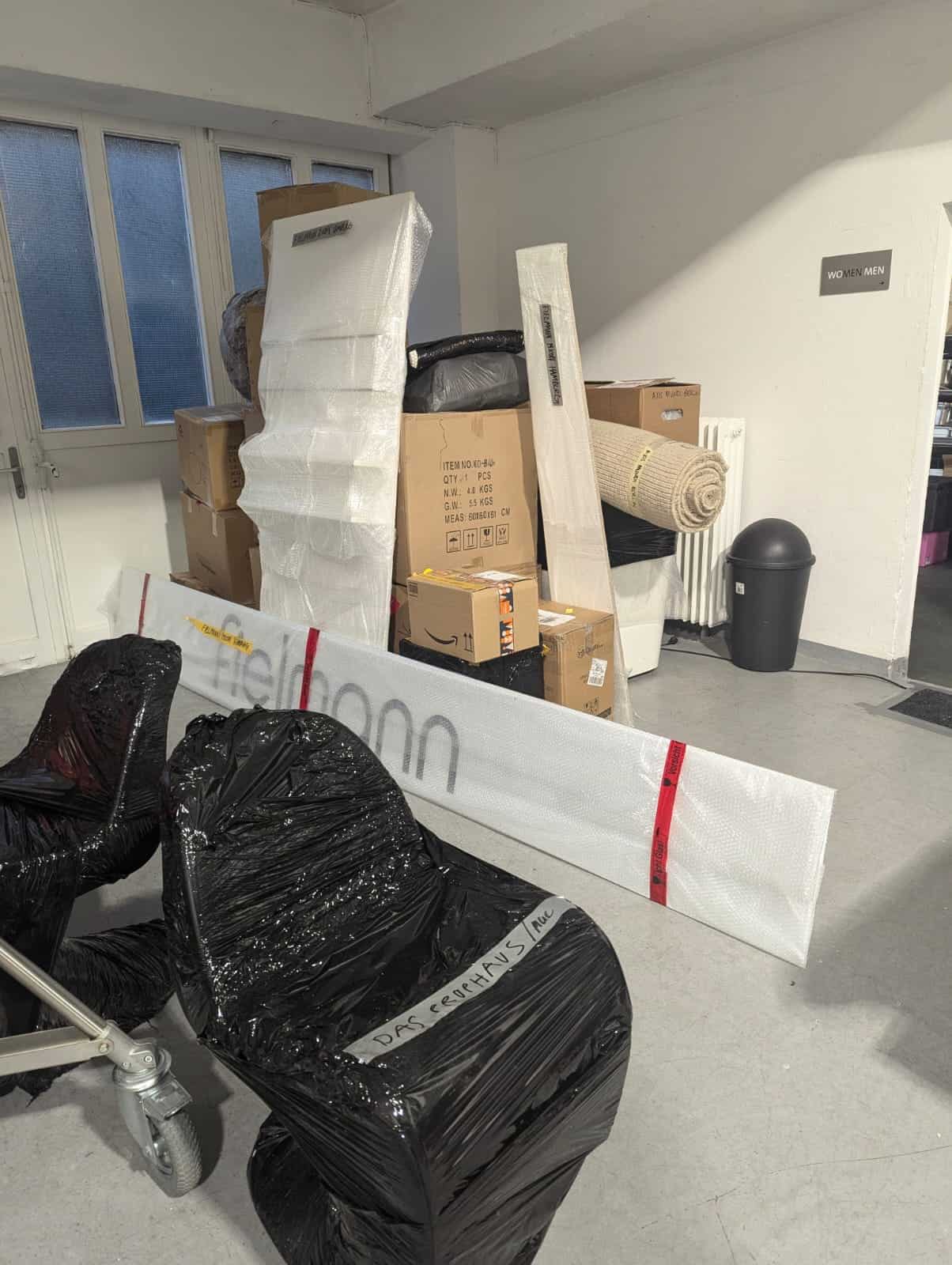
The load determines the vehicle and handling
A furniture inventory is more useful than a guess at the number of boxes. List sofas, wardrobes, beds, tables and fragile items, including dimensions and approximate weights. Indicate whether they can be dismantled and whether they are already packed. The space required, load security and lifting needs affect the transport plan. A quote for a few ready-to-load items is not equivalent to a full packing and household removal service.
The same distance can involve different work
Collection and delivery postcodes are a starting point. A ground-floor loading bay has different requirements from a top-floor apartment with a narrow staircase and distant parking. Tell us the floor, lift dimensions, carry distance and any building restrictions at both ends. A second crew member, lifting equipment, access bookings or extra time must be assessed before the price is confirmed.
Separate the transport from optional services
Ask the quotation to identify transport, packing, assembly, in-room placement and storage where applicable. If your route involves customs, check whether clearance coordination is included and which charges remain separate. Changes to inventory, addresses, access or dates can change the scope. We do not display an automatic fixed price because it would not account for these details.
Compare written scopes rather than headline rates
Before accepting, check what is collected, where the delivery ends, who assists with handling and how the timing is agreed. Declare high-value or unusually fragile items before booking and ask which conditions and liability limits apply. Submit your route and inventory to receive a tailored quotation; no payment or booking commitment is created by the enquiry.
How to compare moving quotations
Use one complete inventory and the same service requirements when asking different companies for a price. A low figure may cover transport between kerbs while another quotation includes collection from inside, protective wrapping, an additional handler or delivery to a specific room. Compare the written scope as well as the total.
- Check the collection and delivery addresses, floors and parking assumptions.
- Confirm whether the price is based on a dedicated, flexible or shared transport plan.
- Look for packing materials, dismantling, assembly and storage as separate items.
- Ask how a change to inventory, access or dates would be handled.
- For a border route, confirm which administrative tasks are and are not included.
Build a more accurate removal request
Start with both postcodes and a room-by-room list. Add dimensions for large furniture and photographs where shape or access may be unclear. State whether dates are fixed or flexible and describe stairs, lifts, loading bays and walking distance. This information lets the team assess the work instead of adding broad allowances for unknowns. For a complete household, use the home removals guide; for cross-border planning, see international removals to the Netherlands.
Choose by intent, not by a broad label
Select the service or route that best describes the real task in the Netherlands. Freight, urgent transport, specialist handling and removals need different information and should not compete for the same search intent.
Prepare one complete enquiry
Have postcodes, dates, contacts, dimensions, weight or inventory, access and requested extras ready. Keeping all relevant facts in one brief supports a clearer quotation and a more useful handover plan.